
Travel Tips & FAQs · 11 min read
Is Sri Lanka Safe in 2026? An Honest Local Answer
Is Sri Lanka safe to visit right now? A practical look at crime, road safety, swimming, solo travel and the precautions worth taking.
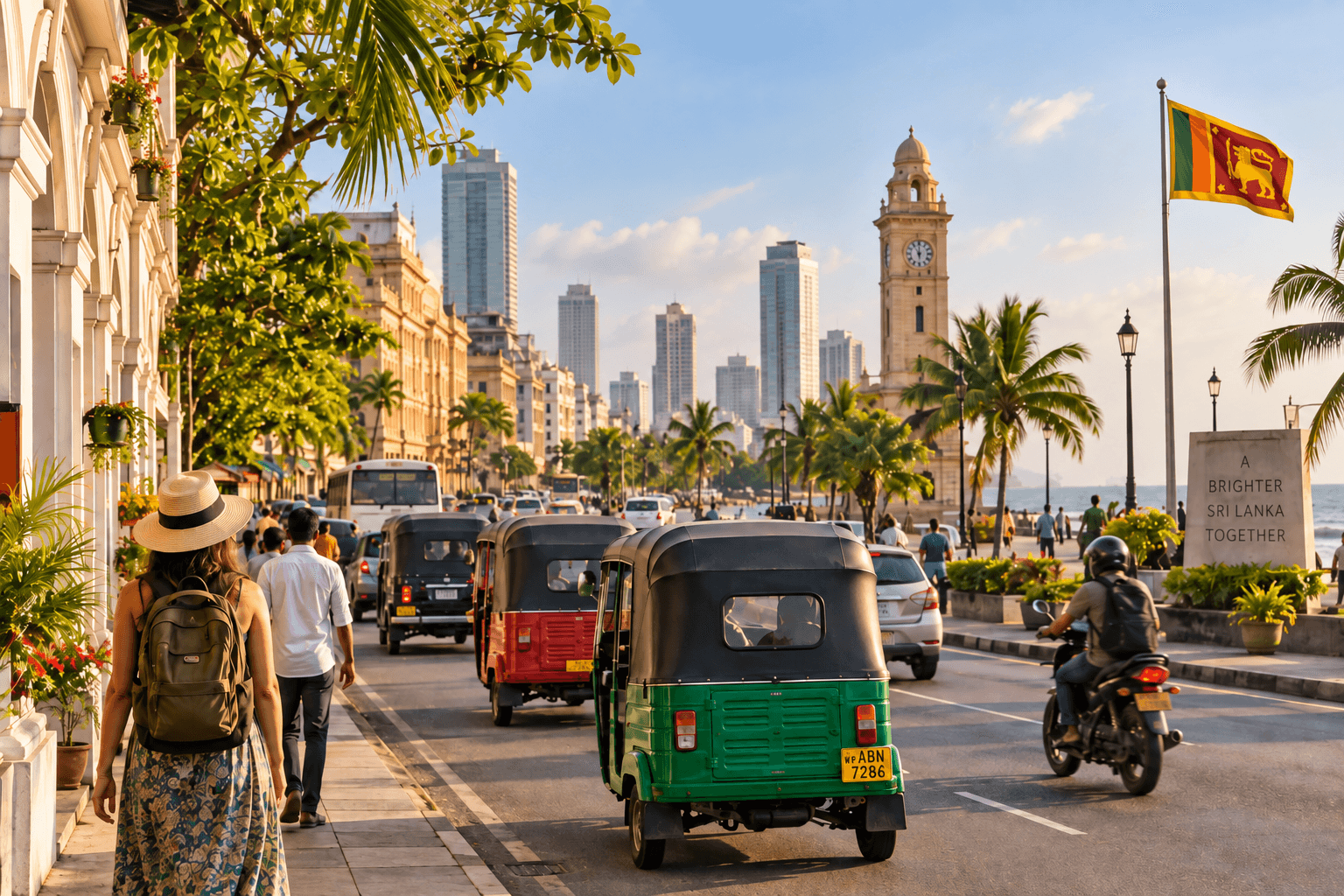
Yes, Sri Lanka is a reasonable destination for most travellers in 2026, provided you use the same judgement you would in any unfamiliar country and pay particular attention to roads, swimming conditions and everyday travel precautions.
That is a more useful starting point than calling Sri Lanka either completely safe or unsafe. The risks are not equal, and some deserve much more attention during an ordinary holiday than others.
The short answer
For most visitors following the established tourism routes through Colombo, the Cultural Triangle, Kandy, the hill country, wildlife areas and the coast, Sri Lanka can be travelled comfortably with sensible planning.
The everyday issues worth preparing for are fairly practical: traffic, tuk-tuk or taxi disagreements, protecting your valuables, choosing transport carefully after dark and checking the sea before swimming. Political demonstrations can also happen with little notice, so avoid them rather than treating them as something to watch.
| Issue | What travellers should know |
|---|---|
| Violent crime | Serious violence is not the main issue most visitors need to plan around. |
| Theft | Opportunistic theft and bag-snatching do occur. Keep phones, passports and money secure. |
| Scams and overcharging | Visitors occasionally encounter inflated transport prices and other tourist-focused schemes. Agree prices or use reputable booking methods. |
| Roads | Driving can be unpredictable, and road accidents are a genuine concern, particularly at night. |
| Swimming | Some beaches develop strong surf and rip currents at certain times of year. Conditions need to be checked locally. |
| Wildlife | Wild elephants, crocodiles and other animals require sensible distance and guidance in relevant areas. |
| Demonstrations | Protests can develop quickly. Avoid demonstrations and follow local instructions. |
The aim is not to spend your holiday thinking about risks. It is to deal with the predictable ones before they become problems.
What happened in 2019 and 2022, and where things stand now
Questions about Sri Lanka's safety often come back to two events: the Easter Sunday attacks in 2019 and the economic and political crisis of 2022. Both were serious, but neither should be described as though it represents everyday conditions indefinitely.
The 2019 Easter attacks
On Easter Sunday in April 2019, coordinated terrorist attacks targeted three churches and three hotels in Colombo, Negombo and Batticaloa. More than 250 people were killed.
The attacks remain part of the country's recent history, but they should not be treated as a description of everyday travel in Sri Lanka today. Stay aware of your surroundings, follow local instructions, and keep an eye on local updates around major events.
The 2022 economic crisis
Sri Lanka's 2022 economic and political crisis brought shortages, large demonstrations, roadblocks, curfews and serious disruption. Some protests became violent.
Those events explain why older articles, forum posts and travel videos may describe conditions that look very different from a normal holiday today.
Current travel planning should use current information rather than assuming either that the problems of 2022 are still happening in the same form or that political disruption can never return. Avoid demonstrations and large political gatherings if they occur during your trip.
Everyday safety: crime, scams and hassle
Serious violence is not the main issue most visitors need to plan around. Everyday precautions around valuables, crowded places and transport go a long way.
Keep valuables out of easy reach in crowded areas, bus and railway stations and busy streets. Bags can be grabbed from passing motorbikes, so avoid carrying an open shoulder bag on the traffic side of the road. Do not leave passports, cash or expensive electronics unsecured in accommodation.
Card fraud is another reason to pay attention when using ATMs or handing over a bank card. An ATM inside a bank, hotel or other controlled location is preferable to an isolated machine if you have a choice.
Tuk-tuks, prices and unwanted detours
Most tuk-tuk journeys are uneventful, but price disputes and overcharging are avoidable sources of frustration.
Use a metered tuk-tuk where available, agree the fare before leaving, or book through a recognised ride-hailing service when that is practical. Sri Lanka Police has previously acted on tourist complaints involving three-wheeler drivers charging extreme fares, so it is worth treating unusually high demands as a dispute to question rather than something you automatically need to pay.
Pause when an unsolicited driver or stranger suddenly tells you that the attraction you planned to visit is closed and offers an alternative stop, gem shop, spice garden or shopping opportunity. That does not mean every recommendation is dishonest. It means you should verify the original plan before changing it.
A simple response is enough: decline politely, continue to your intended destination, and check directly with the attraction or your accommodation if you are unsure.
If something becomes more serious than an annoying sales pitch, Sri Lanka has a Tourist Police division specifically intended to assist visitors.
Road safety deserves more attention than most travellers give it
If we had to choose one routine risk that first-time visitors should plan around carefully, it would be road travel.
Driving in Sri Lanka can feel erratic, particularly after dark. Roads also vary considerably. A route that looks short on a map can involve towns, bends, pedestrians, buses, motorbikes, animals and slow sections.
This matters when building an itinerary. Packing several distant destinations into too few days does not just make the holiday tiring. It also creates pressure for longer drives, early departures and unnecessary travel after dark.
Public buses
Local buses are useful and inexpensive, but they are not the transport option we would choose purely for comfort or predictability on a carefully paced first trip.
That does not mean tourists should never use a bus. It means the experience and risk profile are different from arranging a private car or using other established tourist transport.
Hiring a car, motorbike or tuk-tuk
Self-driving is possible, but do not assume your normal driving licence alone is enough. Permit and insurance requirements apply, and these should be checked against current official guidance before renting.
A motorbike adds another level of exposure. If you have limited experience riding in dense South Asian traffic, Sri Lanka is not a sensible place to learn.
Why travellers choose a private driver
A private driver does not make the roads inherently safe, and driver quality still matters. The practical advantage is simpler: an experienced local driver already understands the road environment, navigation, common routes, parking and realistic journey times.
For a multi-stop itinerary, it also removes the need to negotiate separate transport every day.
If you are planning a route with several inland and coastal stops, see our Sri Lanka private driver guide.
Sea, swimming and rip currents
A beautiful beach is not automatically a safe swimming beach.
Sri Lanka's coast changes throughout the year, and conditions can vary even between neighbouring bays. Some beaches develop strong surf or rip currents at certain times of year, so get local advice before entering the sea.
That last part matters. A general statement such as "the south coast is safe from December to April" is too broad to decide whether you should swim at one particular beach on one particular morning.
Look for local warnings, flags and lifeguards where available. Ask your hotel or another reliable person familiar with that beach. If locals are warning people not to enter the water, take it seriously even if the sea looks manageable from shore.
Surfers should also distinguish between a beach being suitable for surfing and being suitable for casual swimming. Breaking waves, reef, currents and entry points can create very different conditions.
For families, weak swimmers and anyone uncomfortable in moving water, choosing accommodation near a more sheltered swimming area can be worth building into the route from the start.
Is Sri Lanka safe for solo and female travellers?
Sri Lanka is travelled independently by both men and women, but describing the experience as identical would be misleading.
That does not mean a woman should avoid Sri Lanka. It means solo female travellers have a few additional decisions worth making deliberately, especially around crowded places and late-night transport.
For example:
- use reputable transport when travelling late at night;
- move away from a driver or vehicle if something feels wrong before the journey starts;
- keep accommodation details and a working phone available;
- avoid isolated places with strangers you have just met;
- keep a close eye on drinks in bars and nightlife settings;
- use the Tourist Police or regular police if behaviour crosses from irritating into threatening or criminal.
Dress is another area where context helps. Beachwear is normal at tourist beaches and hotel pools, but it is not appropriate inside Buddhist temples. Shoulders and legs should be covered when visiting temples, and shoes and hats are removed.
This is less about changing how you travel and more about knowing when the social context changes.
Health basics
Health preparation for Sri Lanka should be based on current medical guidance rather than travel-blog checklists. Mosquito precautions are sensible throughout the trip: use repellent, wear suitable clothing when mosquitoes are active, and choose accommodation where you can limit bites.
Food judgement is similar to anywhere with a different climate and food-handling environment. Busy restaurants and stalls with high turnover are generally easier to assess than food that has been sitting warm for a long period. What matters is handling and storage, not whether the food comes from a hotel or a street stall.
For drinking water, travellers who are unsure about local tap-water quality should use properly sealed bottled water or another reliably treated supply.
Travel insurance matters as well. Medical treatment and evacuation can become expensive quickly, so check that your policy covers the activities you plan to do rather than assuming every policy covers surfing, hiking, motorbike riding or other activities automatically.
Save the emergency contacts provided by your accommodation, insurer and local travel provider before you need them.
A few precautions that solve most everyday problems
You do not need an elaborate safety routine. A handful of habits cover most ordinary situations:
- Keep your passport, cards and main cash secure rather than carrying everything in an easy-to-reach bag.
- Agree tuk-tuk prices before leaving or use a reputable booking app.
- Avoid unnecessary long-distance road travel after dark.
- Ask locally about sea conditions before swimming.
- Stay away from demonstrations and political gatherings.
- Use more deliberate transport choices when travelling alone at night.
- Keep copies of your insurance details and important emergency contacts available offline.
- Check local conditions and transport updates shortly before departure.
The bigger planning mistake is usually not forgetting a special safety gadget. It is trying to fit too much travelling into too few days.
A route with sensible driving times, the right coast for the season and enough time in each place removes a surprising amount of unnecessary friction. If you are still shaping the trip, start planning your Sri Lanka route before locking in every hotel.
FAQs
Is Sri Lanka safe right now?
For most ordinary tourist travel, yes, with normal precautions.
Conditions can change, so check local conditions and transport updates shortly before departure rather than relying on an article alone.
Is Sri Lanka safe for solo female travellers?
Solo female travel is possible, but additional caution is justified.
Reliable late-night transport, awareness around drinks and avoiding isolated situations with strangers are sensible precautions.
Is it safe to drive in Sri Lanka?
It is possible to self-drive, but it is not a relaxed driving environment for everyone.
Driving can be erratic, particularly at night. Visitors who do not want to adapt to unfamiliar traffic conditions may prefer a driver, trains or organised transfers.
Are Sri Lanka's beaches safe for swimming?
Some are, at the right time and under the right conditions. Others can have strong surf, currents or rip tides.
Do not decide based only on the beach name or the month. Check conditions at the particular beach that day and follow local warnings.
So, should safety stop you visiting Sri Lanka?
For most travellers, current evidence does not support treating Sri Lanka as a destination to avoid altogether. It does support travelling with your eyes open.
Pay particular attention to road travel, swimming conditions, personal belongings and transport choices after dark. Avoid political demonstrations, and do not assume that an old report about the 2019 attacks or 2022 crisis describes day-to-day travel in 2026.
A well-paced route also makes the practical side easier. If you want help deciding where to stay, how long to spend in each place and which transfers fit your trip, contact CeyRoutes and we can shape the journey around your dates and travel style.
Good to know
Your questions, answered
Is Sri Lanka safe right now?
For most ordinary tourist trips, yes, with sensible precautions. The practical areas to plan around are road travel, sea conditions, personal belongings and transport choices after dark.
Is Sri Lanka safe for solo female travellers?
Many women travel independently in Sri Lanka. Extra care is sensible in crowded places, on public transport and when travelling alone at night.
Is it safe to drive in Sri Lanka?
Self-driving is possible with the correct permits, but Sri Lankan road conditions and driving behaviour can be demanding for visitors, particularly after dark.
Are Sri Lanka's beaches safe for swimming?
Not automatically. Surf, currents and rip tides vary by coast, season and individual beach. Ask your hotel, lifeguard or another reliable local source about conditions before entering the water.
From reading to planning
Want this trip planned around you?
Tell us your dates and travel style. We'll reply within 24 hours with honest, local advice and a first-draft itinerary - no pressure, no obligation.